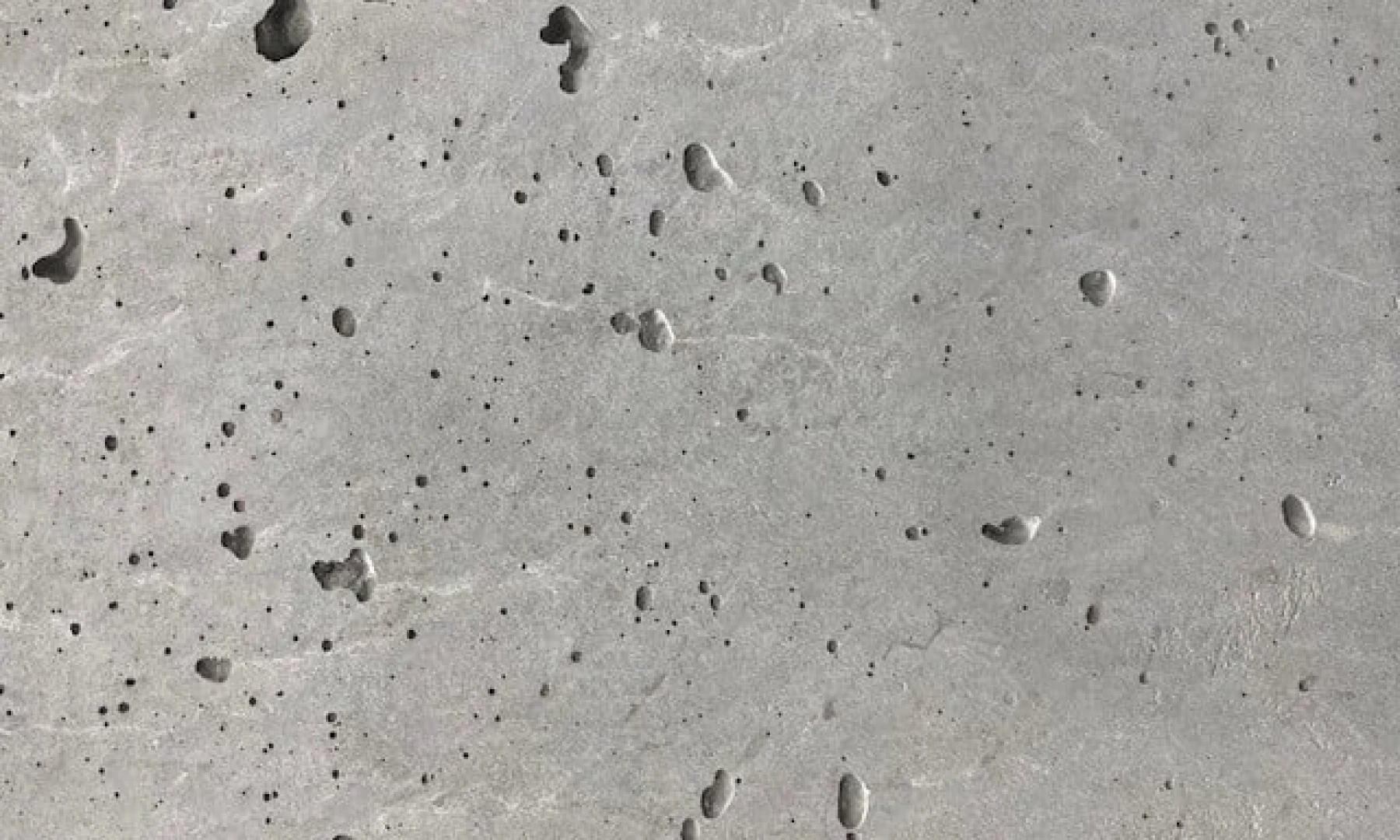
Bugholes are one of the most frustrating defects in fair-faced concrete. They are small, but they are impossible to ignore once the formwork comes off. A surface that looked acceptable during casting can quickly become a quality issue when the light hits it from the wrong angle.
Many crews assume bugholes are mainly a vibration problem. Better vibration helps, but it does not solve everything. If the formwork is dirty, the release film is too heavy, or the mix does not allow air to escape cleanly, vibration alone will not produce a dense surface. In some cases, too much vibration can even worsen the problem by disturbing the surface and creating irregular voids.
If you want a broader checklist for exposed finishes, see How to Prevent Bugholes on Fair-Faced Concrete and Fair-Faced Concrete: The 3 Factors That Decide Surface Quality.
What Are Bugholes?
Bugholes are small surface voids left behind when air cannot escape cleanly during casting. On fair-faced concrete, they are especially visible because the surface is meant to stay exposed and clean.
They usually appear in clusters, around corners, or in areas where placement is uneven. That pattern is a clue. It means the problem is usually systemic, not random.
Why Vibration Is Not Enough
Vibration helps consolidate concrete, but it does not fix a bad interface between the mix, the formwork, and the release film. If the surface conditions are wrong, more vibration only solves part of the problem.
The release layer matters because it sits directly between the concrete and the form. If that layer is too thick or too greasy, air can be trapped where it needs to escape. In that case, the form face becomes part of the problem instead of part of the solution.
The Real Causes of Bugholes
The main causes usually include poor formwork prep, overly thick release agent, inconsistent placement, and a mix that does not release air efficiently. In many cases, the issue starts before the concrete is even poured.
A rough or dirty form surface can hold air pockets. An uneven spray pattern can leave wet spots that behave differently across the same wall. A stiff mix can make it harder for bubbles to migrate out. Once those factors combine, the final face is much more likely to show defects.
What Works in Practice
A stable result comes from controlling the whole system: clean formwork, the right release agent, proper placement speed, and careful vibration. Bugholes are reduced when air is allowed to move out naturally instead of being trapped at the surface.
That means the site team should think in terms of process control. Before the pour, inspect the formwork and confirm even coverage. During the pour, avoid dead zones and keep vibration consistent. After stripping, review the defect pattern so the next pour can be adjusted.
Field Checklist for Better Surfaces
Before the pour, confirm:
- formwork is clean and dry
- release coverage is thin and even
- the mix is workable but not overly wet
- corners and joints are free from residue
During the pour, confirm:
- placement is steady and controlled
- vibration is consistent but not excessive
- no air pockets are building in tight zones
After stripping, confirm:
- defects are mapped by location
- repeat defects are traced back to a process step
- the next pour adjusts the weak point instead of repeating it
Bughole control is a system problem, not a single-action fix. If you want to reduce bugholes on your next project, start by fixing the full process instead of only the vibrator.
Related reading: Release Agent Application: Spraying, Coverage, and Quality Control and How Temperature and Humidity Affect Release Agent Performance.
Need help reducing bugholes on your next pour? Request a sample or send us a site photo for review.