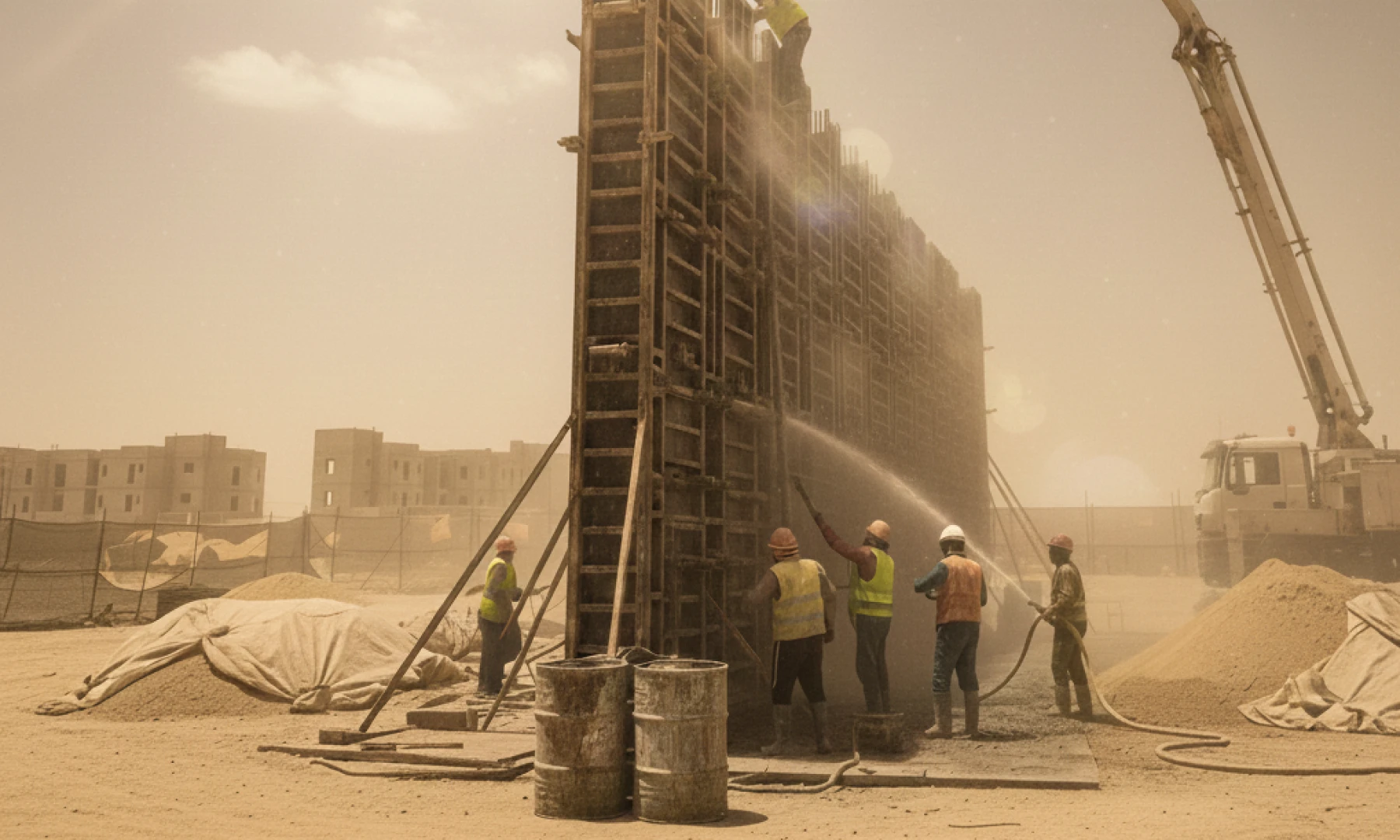
Weather conditions can change how a release agent behaves on site. Temperature and humidity affect drying speed, film formation, and final release performance. That means a product that works well in one season may behave very differently in another.
In hot weather, the film may dry too fast or become uneven before casting starts. In humid conditions, it may stay wet longer or form less predictably. Both situations can affect surface finish, especially when the project requires fair-faced concrete with a clean exposed surface.
This is especially important when you are comparing products in Water-Based Release Agent vs Waste Oil: Why the Cheap Choice Costs More or dialing in the process from Release Agent Application: Spraying, Coverage, and Quality Control.
Why Weather Changes Performance
Release-agent behavior is not constant. The same product can spread, dry, and release differently depending on the climate.
That is why the site team should always treat weather as a process variable, not just a comfort factor.
High Temperature Risks
In hot weather, the film may dry too fast or become uneven before casting starts. That can reduce consistency and make the surface harder to control.
Fast drying can also make application timing more sensitive. If the crew applies the film too early, the surface may change before the pour begins.
High Humidity Risks
In humid conditions, the film may stay wet longer or behave less predictably. That can affect release timing and increase the chance of surface issues.
Humidity can also make the team less certain about whether the surface is ready. That uncertainty often leads to rushed decisions.
Seasonal Adjustments
The application method should change with the weather. Timing, coverage, and inspection habits should all change with the season. Crews should not assume that a winter method will work the same way in summer.
The best results come from adjusting the process, not only the product.
Troubleshooting Guide
If the surface quality changes with the weather, the release agent is only part of the story. The site should also check application timing, formwork temperature, and concrete handling.
If those variables are controlled, the product is much more likely to perform consistently.
For more context on the finish itself, see Fair-Faced Concrete: The 3 Factors That Decide Surface Quality.
If your site conditions are changing, request a sample and let us help you adjust the application method.