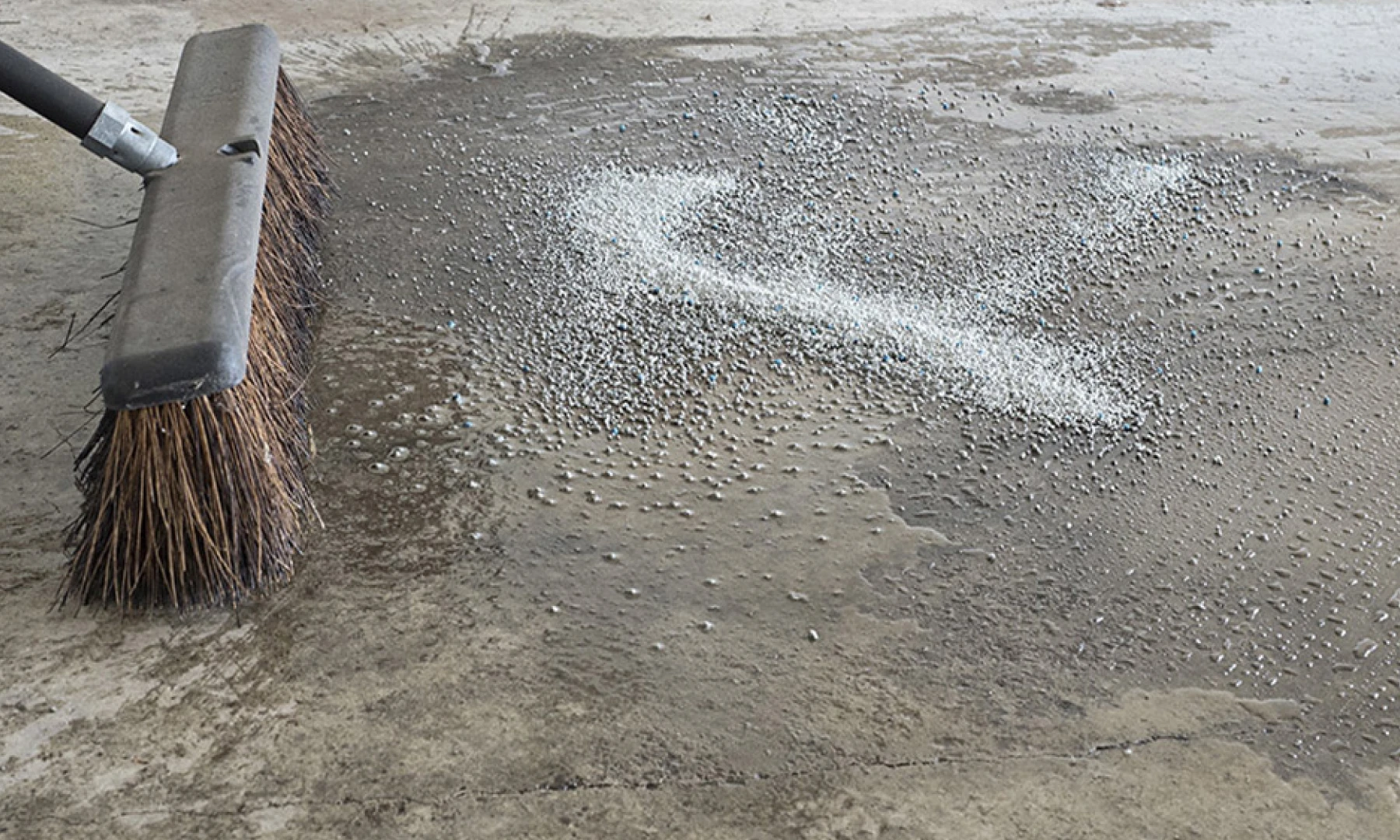
Waste oil still appears on many job sites because it seems cheap and familiar. At first glance, it looks like a practical way to save money on formwork preparation. In reality, it often creates the most expensive problems in the job.
The issue is not just appearance. Waste oil often causes discoloration, staining, poor release, and inconsistent surface quality. It can also shorten formwork life and increase cleanup time after every pour. Once rework, delay, and damage are included, the cheap choice becomes expensive very quickly.
If you are comparing this with real-world application behavior, see Release Agent Application: Spraying, Coverage, and Quality Control and How Temperature and Humidity Affect Release Agent Performance.
Why Waste Oil Is Still Used
Waste oil is often chosen because it is easy to find and easy to explain. Crews know how to apply it, and supervisors may see the low upfront cost as a quick win.
But easy does not mean suitable. What works on rough hidden work is often a poor fit for exposed architectural concrete.
Surface Defects It Causes
Waste oil was never designed to produce clean architectural concrete. It creates an inconsistent barrier, interferes with surface quality, and often leaves behind contamination that makes subsequent work harder.
The result can include staining, dark patches, patchy release, and a surface that looks inconsistent from one pour to the next.
Hidden Costs for Formwork and Rework
Poor release can damage the formwork, shorten its usable life, and increase cleanup time after every pour. If crews must spend more time repairing, washing, or reusing damaged forms, the total project cost rises fast.
That is why the cheapest material is not always the cheapest system. Product cost is only one piece of the total expense.
Why Water-Based Agents Perform Better
Water-based release agents are designed for cleaner separation and more predictable surface results. They are better suited to fair-faced concrete because they support appearance, consistency, and repeatability.
A good water-based system should help the surface breathe, not seal it shut. That difference matters when the exposed concrete is part of the final finish.
Simple Decision Guide
If the project is ordinary structural work with no visible finish requirement, waste oil may seem attractive to some crews. If the project needs a clean, consistent exposed concrete surface, the better choice is usually a water-based system.
The lowest upfront cost is not always the lowest total cost.
For a more surface-quality-focused explanation, read Fair-Faced Concrete: The 3 Factors That Decide Surface Quality.
If you want to compare both options on your own project, request a sample and contact us for a site-specific recommendation.